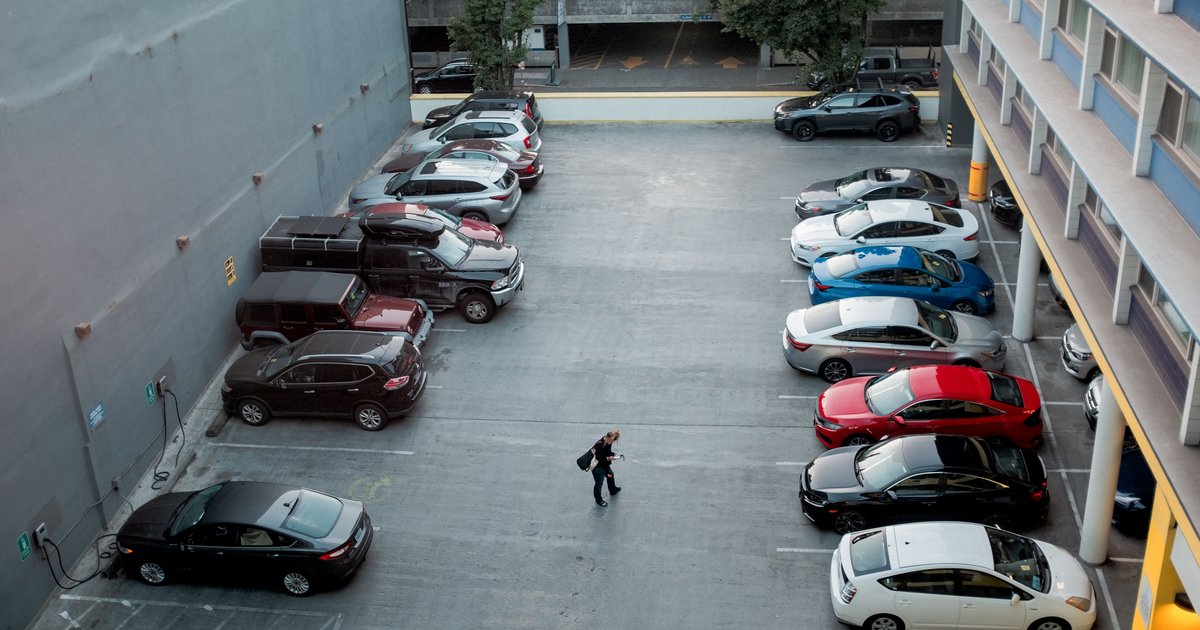
The Short Answer
Is it illegal to save a parking spot by standing in it? In most places, there's no state statute that specifically outlaws a person standing in a parking space to hold it for someone. Traffic codes are written around vehicles — where they can stop, park, or block — not pedestrians occupying asphalt. So a person standing in a spot generally isn't committing illegal parking in the technical sense.
That said, "not a crime" doesn't mean "allowed." Private lots, HOAs, stadiums, and shopping centers set their own rules, and police or security can ask someone to move along, especially if it creates a safety issue or a confrontation. In a few narrow situations — blocking traffic flow, disorderly conduct, or trespassing after being told to leave — a pedestrian holding a spot could cross into actual legal trouble.
Public Streets vs. Private Lots
On a public street, parking is governed by municipal code and state vehicle law. Cities like Boston and Pittsburgh are famous for the winter "space saver" tradition, where residents who shovel out a spot drop a lawn chair or cone in it. Boston has gone back and forth on tolerating this after snowstorms, and the city's official guidance (bostonpublicworks.com, or the mayor's office announcements each winter) is the place to check the current year's rule. Standing in the spot is generally treated the same as a chair: not criminal, but not protected either, and the city can remove placeholders once the snow emergency ends.
Private lots are a different animal. The property owner sets the terms of use, and most posted lot rules (malls, apartment complexes, grocery stores) implicitly require that spaces be used by vehicles, not held by people on foot. If a security guard asks the person to step aside and they refuse, the issue shifts from parking to trespassing — which is enforceable in every state.
When Spot-Saving Can Actually Become Illegal
A few scenarios flip this from annoying to genuinely against the law:
- Blocking a travel lane. If the person is standing in a drive aisle or spilling into the roadway, they may be in violation of local pedestrian-in-roadway or obstruction-of-traffic ordinances.
- Disorderly conduct. If spot-saving escalates into shouting, threats, or refusing to let a vehicle pass, police can cite the pedestrian under state disorderly conduct or disturbing-the-peace laws.
- Trespassing. On private property, once an owner or agent asks the person to leave and they don't, it's criminal trespass in most states.
- Accessible (ADA) spots. Blocking an accessible space — even without a car — can violate state disability-access laws and local ordinances in places like California (enforced locally; see your city attorney's office or the California DMV disabled parking page at dmv.ca.gov for parameters on who may use the space).
None of these specifically outlaw "standing to save a spot," but they're the hooks police actually use when a complaint comes in.
State and City Examples
Enforcement varies more by city than by state. A few noteworthy approaches:
- Massachusetts (Boston): The city has historically allowed space savers for a set number of hours after a declared snow emergency, then removes them. Standing in a spot falls under the same informal truce. Current rules are posted each winter by Boston Public Works.
- Pennsylvania (Pittsburgh): The "parking chair" is folklore, but the city has no ordinance blessing it. Pittsburgh's 311 service handles disputes.
- Illinois (Chicago): "Dibs" is tolerated after snowstorms but not codified. Outside of snow, the Chicago Department of Streets and Sanitation (chicago.gov/streets) will remove objects used to save spots.
- California: No snow tradition, no tolerance. Private lot operators call it trespassing; the California DMV (dmv.ca.gov) doesn't regulate pedestrian behavior in lots.
If you want the real answer in your city, call the non-emergency police line or check your municipality's parking enforcement page — the state DMV won't have it, because it isn't a vehicle-code issue.
What to Do If Someone Blocks a Spot You're Trying to Take
Confrontation almost never works out. A few practical moves:
- Don't inch forward. Hitting a pedestrian — even at 2 mph — is on you, not them, and it will end your day badly.
- Find another spot. The time cost of circling is almost always less than the time cost of an argument or a police report.
- Report it to lot management. In private lots, security can resolve it in a minute. The mall or store wants spaces used for paying customers.
- Document, don't engage. If a vehicle eventually pulls into the "saved" spot and behaves badly (blocks you in, dings your door, etc.), note the plate.
That last point is where a tool like PlateQuery comes in. If the person who swooped in leaves a scratch or you want to let the driver know their buddy's spot-holding caused a problem, you can look up the plate and leave a message without needing their phone number. For anyone who manages a lot where this happens constantly, our plate-based parking management guide for HOAs and apartments covers systems that remove the human standoff from the equation entirely.
Related Parking Law Questions
Spot-saving sits in a gray zone, but a lot of "is this illegal?" parking questions have clearer answers. If you're curious how other everyday parking behaviors are treated, see whether parking in front of a fire hydrant is illegal (yes, universally) and whether drifting in a parking lot counts as a crime. For the broader social side — double parkers, taking two spots, blocking driveways — our parking etiquette guide is the companion read. You can also browse everything we've written on illegal parking.
FAQ
Can I call the police on someone standing in a parking spot?
You can, but most departments will treat it as low-priority and suggest you talk to lot management first. If the person is blocking traffic or being threatening, that changes the response.
Is it illegal to save a spot with a cone or chair?
On public streets, most cities treat objects as abandoned property that can be removed. In a private lot, the property owner can remove them. Snow-emergency exceptions apply in a handful of Northern cities.
Can I just move the person or object?
Moving an object usually isn't a crime. Physically moving a person can become assault, no matter how annoyed you are. Don't do it.
What if someone saves a spot and then the driver dings my car?
Get the plate number and any photos. A plate is enough to start a conversation — see the next section.
The Takeaway
Standing in a parking spot to save it isn't a specific crime in most states, but it's rarely a winning move for the saver either — private property owners can shut it down, and any escalation can tip into trespassing or disorderly conduct. Your best response as a driver is to move on, document, and use the plate if there's damage or follow-up needed. That's where PlateQuery helps: you can look up a license plate and leave the owner a message about how their spot-saving arrangement played out, or create a free account to follow your own plate so you'll know if someone ever needs to reach you after an incident in a lot. Here's an example of what a plate page looks like once a message is left.