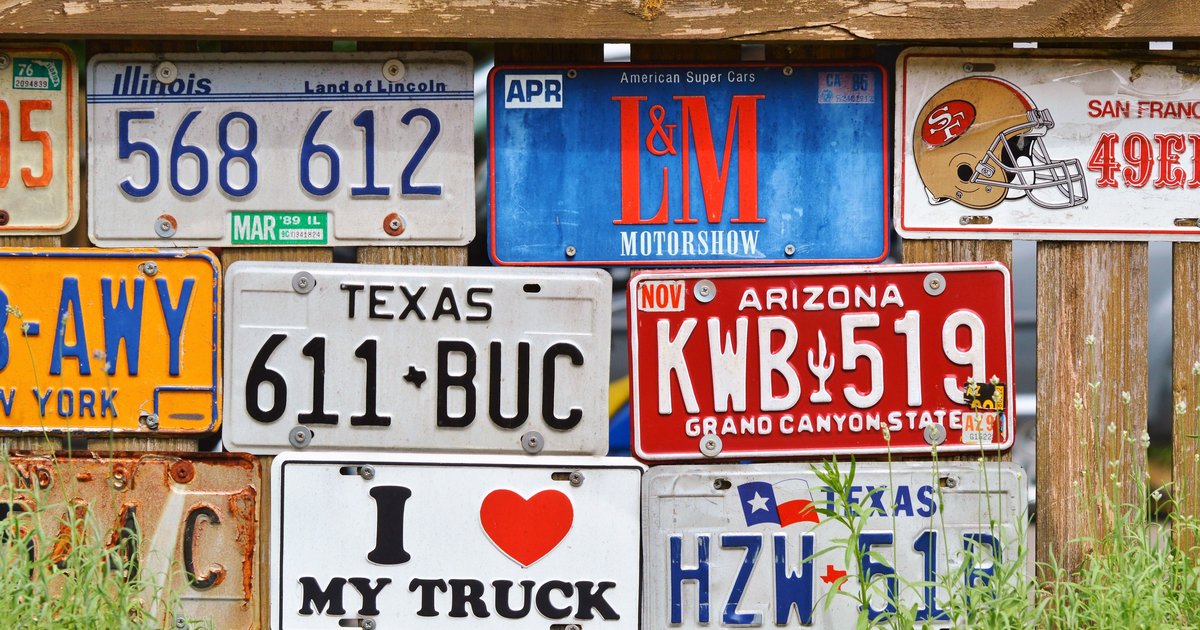
The Basics of License Plate Laws in Texas
Texas Transportation Code Chapter 504 governs how license plates must be issued, displayed, and maintained. If you drive in the Lone Star State, the law requires you to have two license plates—one mounted on the front and one on the rear of your vehicle. Motorcycles, trailers, and certain commercial vehicles are exceptions and only require a rear plate.
Plates must be clearly visible, unobstructed, and legible from a reasonable distance. Covering your plate with a tinted shield, dirt, a bike rack, or even a novelty frame that blocks the state name or registration sticker can result in a citation.
Display and Visibility Requirements
Under Texas law, your plate must be:
- Mounted in a horizontal position
- At a height of at least 12 inches from the ground
- Free from any coating, covering, or material that obscures the letters, numbers, or state name
- Illuminated at night so the rear plate is readable from 50 feet away
For example, if your trailer hitch blocks part of your rear plate, an officer can pull you over. The same goes for tinted plate covers, which are explicitly prohibited—even clear covers can land you a ticket if they cause glare or reduce visibility.
Registration Stickers and Renewal
Texas eliminated the front windshield inspection sticker in 2025, consolidating everything into a single registration sticker placed on the windshield. Your license plate itself doesn't carry a renewal sticker like in some other states, but driving with expired registration is a Class C misdemeanor that can lead to fines of up to $200.
If you've recently moved to Texas, you have 30 days to register your vehicle and obtain Texas plates. Driving with out-of-state plates beyond that window violates state law.
Vanity and Specialty Plates in Texas
Texas offers one of the most extensive specialty plate programs in the country through My Plates, the state's authorized vendor. Drivers can choose from hundreds of designs—college teams, military service, professional sports, and charity causes.
Vanity plates allow personalized combinations of letters and numbers, but the Texas Department of Motor Vehicles reserves the right to reject any plate considered offensive, misleading, or duplicative. For instance, plates referencing profanity, drugs, or impersonating law enforcement will be denied.
If you're curious about a personalized plate you've seen on the road, you can perform a Texas license plate lookup to learn more about it or leave a public message for the owner.
Common Violations and Penalties
Some of the most frequently cited license plate violations in Texas include:
- Missing front plate: Fine up to $200
- Obstructed or illegible plate: Up to $200
- Expired registration: $100–$200, escalating with time
- Fictitious or altered plates: Class B misdemeanor, up to $2,000 and possible jail time
- No plate light at night: Equipment violation, around $25–$100
Drivers sometimes try to avoid toll cameras or red-light enforcement by bending or covering their plates. In Texas, this is treated as plate tampering and carries serious consequences.
Lost, Stolen, or Damaged Plates
If your plates are lost or stolen, you're required to report it to local law enforcement and apply for replacement plates through your county tax office. Driving without replacement plates—even temporarily—violates Texas law. Stolen plates are often tied to other crimes, including abandoned vehicles left in public spaces.
FAQs About Texas License Plate Laws
Do I really need a front license plate in Texas?
Yes. Despite the popularity of plate-delete trends on social media, Texas law clearly requires both front and rear plates on most passenger vehicles.
Can I use a clear plate cover?
Technically, any cover that reduces visibility—even a clear one—can result in a citation. It's safest to leave your plate uncovered.
Are blackout or tinted plate frames legal?
Only if they don't obscure any letters, numbers, the state name, or the registration sticker. Most aftermarket frames that block the words "Texas" or "The Lone Star State" are not compliant.
What if someone is using a plate that looks fake or expired?
You can report it to local police. You can also do a quick lookup to see if the plate is registered and leave a note for the owner if needed.
How PlateQuery Can Help
Whether you've witnessed illegal parking, want to file a bad driver report, or simply need to contact a vehicle owner about a dinged bumper or unattended vehicle, PlateQuery makes it easy. You can search any Texas plate, leave a message tied to the plate, or claim your own plate profile to receive notifications directly. Knowing the license plate laws in Texas is the first step—PlateQuery helps you take the next one.