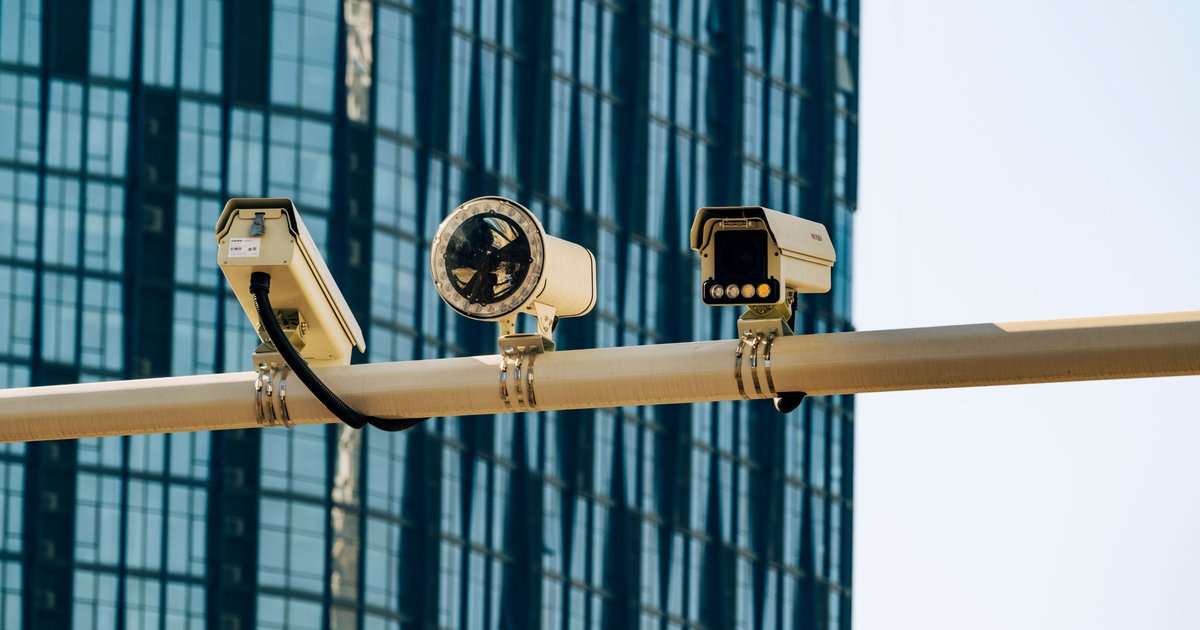
What Flock Safety Cameras Actually Are
Flock Safety cameras are solar-powered, cellular-connected automated license plate readers (ALPRs) mounted on poles at neighborhood entrances, intersections, and along major roads. Unlike red-light cameras, they don't issue tickets. Their job is to photograph every vehicle that passes and extract searchable data from each image — license plate characters, state of issue, vehicle make, color, body type, and distinguishing features like roof racks, bumper stickers, or missing hubcaps.
The hardware itself is deceptively simple: a weatherproof housing, an infrared-capable camera, a license plate recognition algorithm running on the device, and an LTE modem that uploads data to Flock's cloud. Each unit costs a department roughly $2,500 to $3,000 per year on a subscription basis, which is why you'll see them deployed by police departments, HOAs, and private businesses alike.
How Does a Flock Camera Work, Step by Step
When a vehicle enters the camera's field of view, a motion-triggered shutter captures a still image — not continuous video. The onboard software processes that image in under a second, isolating the license plate and converting the characters into text through optical character recognition. The system then packages the plate number, a timestamp, GPS coordinates of the camera, and the vehicle's "fingerprint" (color, make, body style) and transmits that packet over cellular networks to Flock's servers.
From there, the data lands in a searchable database called FlockOS, which law enforcement users can query. The default retention period is 30 days, after which records are supposed to be auto-deleted unless flagged as evidence in an active case. Flock also runs incoming plates against the FBI's National Crime Information Center (NCIC) hot list in real time, so if a stolen vehicle or Amber Alert plate rolls past, officers get an instant notification on their phones.
What Reddit Users Keep Getting Wrong
Scroll through any thread titled "how do Flock cameras work reddit" and you'll see recurring myths worth clearing up. The first: Flock cameras do not use facial recognition. They can't ID a driver by face, and the images are intentionally framed to capture the vehicle, not the cabin. The second myth is that they "track you everywhere" — in reality, they only know you passed a specific camera at a specific time. Stitching that into a travel pattern requires multiple cameras along your route and someone actively running a search.
Another common misconception: that Flock is a government surveillance program. It's a private company (headquartered in Atlanta) that sells access to its network. Any department or HOA that buys cameras can also opt into the national network, meaning a Flock camera in Dallas can be queried by a detective in Denver if both agencies have enabled sharing. That reciprocity is exactly what privacy advocates on Reddit object to.
Who Can See Your Plate Scans
Access depends on the camera's owner. Police-owned cameras feed FlockOS accounts belonging to that agency's sworn officers, plus any partner agencies they've granted search access to. HOA- and business-owned cameras can be configured to share with local police or kept private to the property manager. Every search is supposed to generate an audit log tied to the officer's badge number and a stated reason — but as several high-profile cases have shown, those audits are only as good as the department's enforcement.
Here's the part most Reddit posts miss: ALPR data collected by public agencies is generally subject to state public records laws. In Illinois, for example, the Freedom of Information Act (5 ILCS 140) has been used by journalists and researchers to pull entire scan logs from municipal Flock deployments. California's SB 34 goes further, specifically requiring ALPR operators to publish a usage and privacy policy and submit to public audits. That's how transparency projects — including the ALPR history visible on every PlateQuery plate page — get their data.
How Long Data Is Stored and Where It Goes
Flock's standard contract sets a 30-day rolling deletion window, but that's a default, not a law. Agencies can configure longer retention, and anything flagged in an investigation can be preserved indefinitely as evidence. Some departments have quietly extended retention to 90 days or more; others, under pressure from city councils, have shortened it. Virginia passed HB 2724 in 2025 that explicitly caps ALPR retention at 21 days for state and local agencies unless tied to an active case — one of the stricter frameworks in the country.
Once a record exists in FlockOS, it can be exported, shared with partner agencies, or (if subpoenaed) produced in civil litigation like custody disputes and insurance investigations. That last point surprises people — your scan history isn't just a cop tool, it's a discoverable record.
How to Check If Your Own Plate Has Been Scanned
Thanks to FOIA releases from dozens of agencies, portions of Flock scan data have made it into the public domain. PlateQuery aggregates these releases and makes them searchable: type in any U.S. plate and you'll see a public ALPR lookup history showing which agency's camera recorded that plate and when. It's not a complete record — only data that's been legally released shows up — but it's often enough to give you a sense of where and how often your vehicle has been logged.
If seeing your own scan history on a public page makes you uncomfortable, you can claim your plate on PlateQuery. Claiming starts a Stripe subscription (around $1.99/month or $11.99/year) and immediately hides both the ALPR history and any messages left for that plate from public view. The public page still exists, but those sensitive sections become visible only to you as the verified owner.
FAQ
Can Flock cameras read my plate at night?
Yes. The cameras use infrared illumination, so plates are readable in total darkness without a visible flash.
Do Flock cameras record video?
No. They capture still images triggered by motion, not continuous video streams.
Can I opt out of being scanned?
Not really. If you drive on a public road past a camera, your plate will be captured. Your only real recourse is pushing for stronger local retention laws or requesting your records via FOIA.
Are Flock cameras legal?
Yes, in all 50 states, though specific use is governed by state ALPR statutes (like California SB 34 or Virginia HB 2724) and local policy. Several cities have banned them outright after public backlash.
The Practical Takeaway
Reddit threads about how Flock cameras work tend to spiral into worst-case speculation, but the honest answer is more boring and more useful: they photograph passing vehicles, extract plate and vehicle data, and feed it into a searchable database used by law enforcement and private operators. The real privacy risk isn't the camera itself — it's who can query the data and for how long it's kept.
If you want to see what's actually in the public record about your vehicle, search your plate on PlateQuery's free ALPR history tool. If you'd rather keep that information private going forward, claim your plate from its page and lock down both the scan history and any inbound messages to you alone.