How Does a Flock Camera Work, Day or Night?
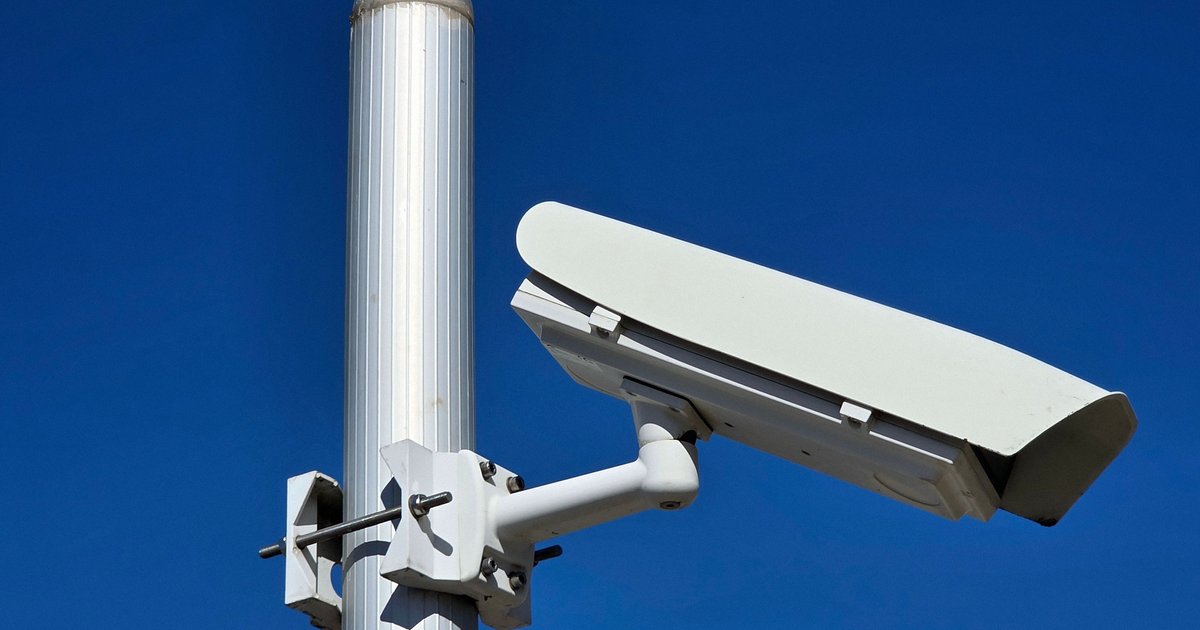
Flock Safety's Falcon camera is a solar-powered, cellular-connected device mounted on a pole along a roadway, in a neighborhood entrance, or at a business. Instead of recording continuous video like a traditional CCTV camera, it captures a still image every time a vehicle passes its field of view. Onboard software then runs automated license plate recognition (ALPR) to extract the plate characters, along with 'Vehicle Fingerprint' data like make, color, body type, roof rack, bumper stickers, and damage.
Each capture is time-stamped, geotagged to the camera's location, and uploaded over LTE to Flock's cloud. Local police, sheriff's offices, and HOAs that subscribe can then search those captures by plate, partial plate, or vehicle description. So when people ask how does Flock camera work in practice, the short answer is: it's a purpose-built, always-on ALPR stills camera that only cares about vehicles, not faces.
How Do Flock Cameras Work at Night Specifically?
Nighttime is where ALPR cameras historically struggled, because headlights wash out plates and ambient light drops to near zero. Flock solves this with three key design choices working together.
First, the camera uses a monochrome (black-and-white) image sensor instead of color. Monochrome sensors are significantly more light-sensitive because they don't lose brightness to a color filter array, which makes them far better at reading reflective plates in low light.
Second, the Falcon includes a built-in infrared (IR) illuminator. This emits invisible 850nm or 940nm light that bounces off the retroreflective coating on standard license plates and returns a crisp, high-contrast image. You won't see a flash because the human eye can't perceive that wavelength, but to the camera the plate essentially glows white against a dark background.
Third, the camera uses a very fast shutter speed and narrow aperture, calibrated specifically to freeze a plate at highway speeds without motion blur. This also prevents headlight glare from overexposing the frame — the shutter closes before the headlights can wash out the image. The trade-off is that the overall scene (driver, passengers, surroundings) often appears very dark or black, while the plate itself is sharp.
What a Flock Camera Can and Can't See at Night
At night, a Flock camera can reliably capture:
- The license plate number and issuing state
- Vehicle make, body type (sedan, SUV, pickup), and general color (though color accuracy drops in IR)
- Distinguishing features like roof racks, aftermarket wheels, missing bumpers, or large decals
- Direction of travel and timestamp
What it generally can't see at night:
- Faces of the driver or passengers (IR plus tinted or reflective windshields usually makes the cabin unreadable)
- Fine color detail — a dark blue car and a black car can look identical
- Anything outside the camera's narrow field of view, which is typically one or two lanes
Range, Speed, and Weather Limits
Flock advertises accurate plate capture up to roughly 75 mph and at ranges of about 30 to 75 feet depending on the lens configuration selected at install. In heavy rain, dense fog, or snow, IR reflection off precipitation can degrade accuracy — the same way your headlights 'bounce back' in fog. Dirty, obscured, or non-retroreflective novelty plates also read poorly at night because the IR trick depends on the plate's reflective coating.
This matters legally in some states. For example, California Vehicle Code 5201 requires plates to be 'clearly visible' and prohibits plate covers that reduce legibility, and tinted covers that defeat IR reflection can draw a fix-it ticket. Texas Transportation Code 504.945 similarly makes it an offense to display a plate with a coating or covering that obscures it. These statutes were written before ALPR was widespread, but they're exactly what makes nighttime Flock reads possible on most vehicles.
How Long Is Night Footage Stored?
By default, Flock retains captures — day or night — for 30 days, after which they're automatically deleted unless flagged as evidence in an active investigation. Individual agencies can shorten that window (some cities have mandated 7 or 14 days), but 30 days is the standard. Hot-list alerts (stolen vehicles, AMBER Alerts, wanted plates) are generated in near real time as the capture is processed in the cloud, often within seconds of a vehicle passing the camera.
How to See Your Own Nighttime Flock Scans
Because Flock contracts with public agencies, scan logs are frequently obtainable through state public-records or FOIA requests. Journalists and transparency groups across the country have been pulling these logs and releasing them, which is how a surprising amount of ALPR history has become public record.
PlateQuery aggregates those released records into a free lookup. Enter any U.S. plate on PlateQuery and you'll see a public ALPR history section showing dates, times, and which agency's Flock network recorded that plate — including nighttime captures. It's a straightforward way to check your own vehicle's footprint without filing a records request yourself.
FAQ
Do Flock cameras flash at night?
No visible flash. They use infrared illumination at wavelengths outside human vision, so drivers never notice they've been captured.
Can Flock cameras read plates in complete darkness?
Yes. The combination of IR illumination and the retroreflective coating on standard-issue license plates means the plate is readable even on an unlit rural road.
Do Flock cameras work in rain or snow at night?
Mostly yes, but accuracy drops. IR light scatters off raindrops and snowflakes, which can soften plate characters or trigger misreads of a letter or digit.
Can a Flock camera identify the driver at night?
Generally no. Flock explicitly markets itself as not using facial recognition, and the fast shutter plus IR exposure typically renders the cabin interior as a dark blur.
Do Flock cameras record video?
No. They capture still images triggered by vehicle motion, not continuous video. This is true 24 hours a day.
The Takeaway
Flock cameras work at night by pairing a light-sensitive monochrome sensor with invisible infrared illumination and a shutter calibrated to freeze fast-moving plates — meaning a dark street doesn't offer the privacy most drivers assume. If you're curious whether your vehicle has been scanned (and by which agency), head to PlateQuery, search your plate, and review the free public ALPR history on your plate's page. If you'd rather that history — plus any messages people leave about your vehicle — stay private, you can claim your plate from its own page for about $1.99/month or $11.99/year, and those sections become visible only to you.