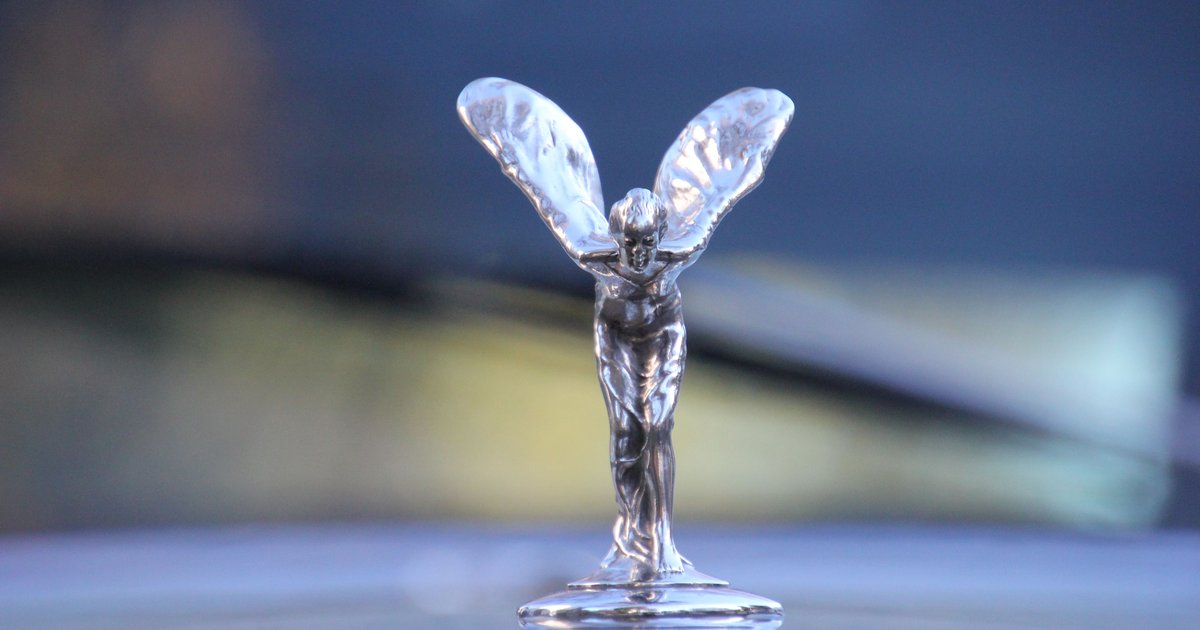
What Is a Hood Ornament?
A hood ornament — sometimes called a mascot, radiator cap figure, or bonnet ornament — is a decorative emblem mounted on the front-center of a vehicle's hood. In the early 1900s, it started as a purely functional piece: a Boyce Motometer screwed onto the radiator cap to display coolant temperature. Once thermometers moved inside the dashboard, the cap itself became a canvas for sculpture, and automakers turned it into a signature.
By the 1920s and '30s, hood ornaments were rolling art. Rolls-Royce introduced the Spirit of Ecstasy in 1911, Packard had its cormorant, Cadillac its heraldic goddess, and Lincoln its leaping greyhound. Owners could also buy aftermarket mascots — nudes, animals, aircraft, chrome comets — the way today's drivers pick a personalized plate. It was one of the first mass-market ways to say something about yourself with your car.
Hood Ornament vs. Vanity Plate: Two Ways to Personalize
Hood ornaments and vanity plates serve the same basic emotional purpose: they turn a mass-produced vehicle into your vehicle. A hood ornament is visual and wordless — a leaping cat or a winged woman signals taste, wealth, or humor at a glance. A vanity plate does the same job with letters and numbers, which is why the two accessories have always attracted the same personality type. If you want a deeper look at the plate side of that equation, see this plain-English guide to vanity plates.
The difference is regulation. Nobody applies to a state agency for a hood ornament, but every custom plate goes through a review process. Some drivers stack both — a classic Mercedes tri-star up front and a clever seven-character message on the back — for maximum expression from bumper to bumper.
Why Hood Ornaments Nearly Disappeared
Three forces killed the golden age of the hood ornament. First, aerodynamics: as fuel economy became a selling point in the 1970s and '80s, designers wanted smooth, wind-cheating hoods, not sculptures catching air. Second, pedestrian safety: European regulations, particularly the EU pedestrian-protection directive that took full effect in the 2000s, required that anything protruding from a vehicle either be flush-mounted or fold, retract, or break away on impact. Rolls-Royce solved this by making the Spirit of Ecstasy retract into the grille within milliseconds of a bump or a touch.
Third, theft. Mercedes-Benz three-pointed stars became a kind of trophy for vandals, spawning aftermarket spring-loaded bases and, eventually, a shift toward flat badges embedded in the grille. By the 2010s, mainstream automakers had essentially retired the stand-up ornament, keeping it only on flagship luxury models.
Are Hood Ornaments Legal in the U.S.?
There is no federal U.S. law banning hood ornaments outright, and the National Highway Traffic Safety Administration doesn't regulate them the way Europe does. Regulation happens at the state level, and it's usually indirect — buried in vehicle equipment codes that address hood-mounted items, obstruction of view, and safety hazards.
California is a good example. Vehicle Code § 26708 governs objects placed on a vehicle that could obstruct the driver's view, and § 27600 covers required fenders and hood equipment. Neither section prohibits a traditional hood ornament, but a homemade or oversized mascot that blocks sightlines or creates a sharp protrusion can draw a fix-it ticket. In New York, VTL § 375 similarly focuses on unsafe conditions rather than banning mascots. The practical rule of thumb: factory ornaments are fine everywhere; aftermarket ones should be smooth, low, and securely mounted.
Famous Hood Ornaments and What They Say
- Spirit of Ecstasy (Rolls-Royce): Sculpted by Charles Sykes in 1911; today's version retracts electronically and is made of stainless steel or, on some special editions, illuminated frosted crystal.
- Three-Pointed Star (Mercedes-Benz): Represents Daimler's ambition for engines on land, sea, and air. Still stands on sedans like the S-Class and E-Class.
- Leaping Jaguar (Jaguar): Officially discontinued from production cars in the 2000s over safety rules, but wildly popular as an aftermarket accessory on classics.
- Flying Lady, Goddess, Greyhound, Cormorant: Cadillac, Packard, Lincoln, and other American marques used these into the 1950s. They're prized collectibles today, with rare examples selling for four figures at auction.
Collecting and Restoring Hood Ornaments
Vintage hood ornaments have become a serious collectible category. René Lalique's glass mascots from the 1920s — cockerels, dragonflies, a comet — routinely sell at auction houses like Bonhams for $3,000 to $30,000 depending on rarity and condition. Even mid-century chrome pieces from Chevrolet, Buick, and Pontiac trade briskly on eBay in the $50–$400 range.
If you're restoring a classic and shopping for a replacement, watch for reproductions marketed as originals. Genuine pre-war ornaments almost always show casting marks, a manufacturer's name (Lalique, Red Ashay, Desmo), and honest wear on the base. Re-chroming a pitted original often costs more than buying a nicer example outright, so inspect before you plate.
Hood Ornaments in the Modern Custom Scene
Even as automakers moved away from them, hood ornaments never fully left the road. Truckers still bolt chrome bulldogs, eagles, and naked-lady figures to Peterbilts and Kenworths. Lowrider builders mount vintage swan or greyhound mascots on Chevys and Lincolns. And a whole subculture of hot-rodders 3D-prints custom pieces — skulls, cartoon characters, family crests — the same way another driver might spring for a personalized tag like NIFTY or LURKER.
The through-line is the same instinct that drives someone to spend extra for a vanity plate: a mass-produced car shouldn't have to look mass-produced.
Frequently Asked Questions
Are hood ornaments illegal in any U.S. state?
No state has a blanket ban. States regulate them through general equipment and driver-visibility statutes. As long as the ornament doesn't obstruct the driver's view, isn't dangerously sharp, and is securely mounted, factory and tasteful aftermarket pieces are legal nationwide.
Why do Rolls-Royce hood ornaments disappear?
The Spirit of Ecstasy is spring-loaded and motorized. On modern Rolls-Royce models, it retracts into the grille when the car is locked or if it detects a strike, protecting both pedestrians and the ornament itself from theft.
Can I put any hood ornament on my car?
Legally, yes, within the safety limits above. Practically, drilling into a modern hood may void paint warranties and can interfere with pedestrian-impact crumple zones designed into the sheet metal. Magnetic or adhesive mounts are safer choices on newer vehicles.
Do hood ornaments affect insurance or resale?
A factory ornament — say, the star on a Mercedes — is expected and priced into the car's value. Aftermarket ornaments generally don't change insurance rates, but expensive vintage mascots should be listed as declared accessories on your policy if you want them covered against theft.
The Takeaway
Hood ornaments and vanity plates are two ends of the same century-long conversation about identity on the road. If a chrome greyhound isn't your style, a well-chosen plate can say just as much. And if you're curious what a specific plate you spotted actually means — or you want to see your own plate's public scan history and manage messages tied to your car — you can search any tag on PlateQuery, or claim your plate directly from its page to keep those details private. Browse more plate stories and guides on the vanity plate hub.