Why Flock Safety Is Being Sued
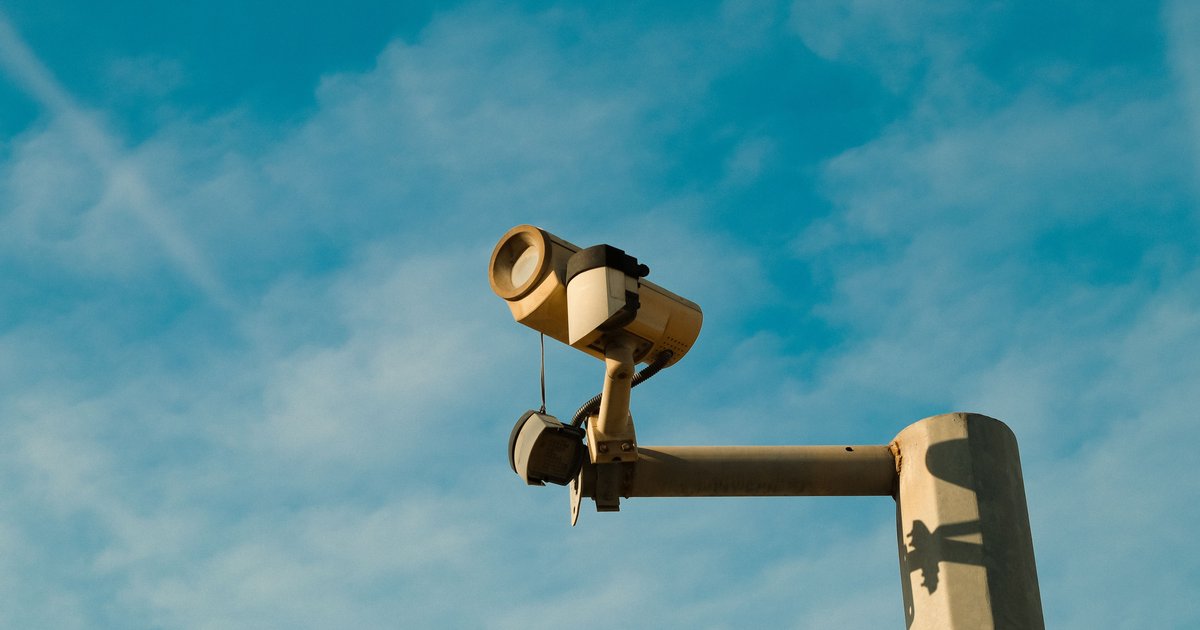
Flock Safety operates one of the largest private ALPR networks in the United States, with cameras in more than 5,000 communities capturing an estimated billion-plus plate reads every month. The company's pitch to police departments and homeowners' associations is simple: solve more crimes with less effort. But civil liberties groups argue that recording the movements of every passing vehicle — innocent or not — and storing that data for 30 days by default crosses a constitutional line.
That tension has produced a growing stack of lawsuits. Plaintiffs typically claim the cameras violate the Fourth Amendment's protection against unreasonable searches, state constitutional privacy rights, or local ordinances that were never updated to anticipate persistent, networked surveillance. When people search "flock safety sued," they're usually trying to figure out whether a case affects their town, their rights, or an ongoing legal matter they're caught up in.
The Norfolk, Virginia Case: Schmidt v. City of Norfolk
The most closely watched flock safety lawsuit is Schmidt v. City of Norfolk, filed in October 2024 in the U.S. District Court for the Eastern District of Virginia by the Institute for Justice. Norfolk operates 172 Flock cameras blanketing the city, and the complaint argues the network effectively tracks every driver's movements without a warrant — a digital-age violation of the Fourth Amendment under the reasoning of Carpenter v. United States (2018), which held that long-term location tracking requires a warrant.
In October 2025, the Fourth Circuit heard oral arguments on an appeal after a district judge initially dismissed the case. The plaintiffs, Lee Schmidt and Crystal Arrington, argue they can't drive to work, church, or a doctor's appointment in Norfolk without being logged. A ruling from the Fourth Circuit is expected to be one of the most consequential appellate decisions on ALPR surveillance to date, and could set precedent across Maryland, Virginia, West Virginia, and the Carolinas.
Illinois: Stratton v. Village of Orland Park
Illinois has become another front. In Stratton v. Village of Orland Park, filed in Cook County in 2024, plaintiffs argued that the village's Flock deployment violated Illinois' automatic license plate reader statute, 625 ILCS 5/18-1 — which restricts ALPR use primarily to toll collection and specific law enforcement purposes. The suit also invoked the Illinois Constitution's Article I, Section 6 privacy clause, which courts have interpreted more broadly than its federal counterpart.
Separately, in 2024 the Illinois Secretary of State's office issued cease-and-desist warnings to several municipalities operating Flock cameras without the required permits under the Illinois Highway Code, and reporting from 404 Media showed Illinois Flock systems were being queried for immigration and abortion-related searches by out-of-state agencies — fueling further litigation threats under the state's reproductive health privacy laws.
Washington State and the SAFE Act Challenges
In Washington, a 2024 lawsuit challenged Flock deployments in several cities for conflicting with RCW 46.08.065, which limits how government agencies can collect and retain vehicle location data. The ACLU of Washington has publicly pushed for stricter retention limits — currently many Washington agencies keep Flock data for 30 days, while the ACLU argues anything beyond 24 hours without reasonable suspicion is excessive. Settlement negotiations in at least one city led to a reduced retention window and a public audit log requirement.
Fourth Amendment Arguments at the Core
Across these cases, the legal theory is strikingly consistent. Plaintiffs don't argue that a single camera reading a plate on a public street is unconstitutional — the Supreme Court has long held there's no reasonable expectation of privacy in a license plate itself. Instead, they argue that a dense, interconnected, searchable network crosses into "mosaic theory" territory: individual data points that are each innocuous combine to reveal intimate patterns of life.
That's the exact reasoning the Supreme Court used in Carpenter to require warrants for cell-site location data. The question lower courts are now wrestling with is whether a city-wide Flock deployment, which can show every place a car has been for the past month, is more like a single traffic stop (constitutional without a warrant) or more like cell tracking (not). The outcome will likely vary circuit by circuit until the Supreme Court takes it up.
Private and Class Action Suits
Beyond constitutional cases, Flock has faced private litigation too. In 2024, a putative class action in federal court in Georgia accused Flock of violating the Driver's Privacy Protection Act (DPPA), 18 U.S.C. §§ 2721–2725, by enabling access to vehicle location data that effectively identifies drivers without their consent. Homeowners' associations that installed Flock cameras have also been sued by residents under state wiretapping and nuisance laws, particularly in California and Florida.
Flock has generally defended itself by arguing that license plate data is not "personal information" under the DPPA and that its clients — not Flock itself — control retention and search policies. Courts have split on whether that distinction holds up when Flock designs the underlying searchable network.
What the Lawsuits Mean for Everyday Drivers
Even if you've never been pulled over or investigated, your plate has almost certainly been scanned by a Flock camera if you drive through a mid-sized American city. The lawsuits matter because they may ultimately dictate how long that data is kept, who can search it, and whether you have a right to know. Several of the pending cases seek court-ordered deletion of historical scan data and public audit logs for every search.
Until courts settle these questions, transparency is largely in the hands of journalists, researchers, and public-records requesters who pry data loose through FOIA. That's the gap tools like PlateQuery try to help fill — surfacing already-public ALPR scan logs so individual drivers can see what agencies have recorded their vehicle and when.
Frequently Asked Questions
Has Flock Safety lost any lawsuits yet?
As of early 2026, no final appellate ruling has struck down Flock's camera networks nationwide. Several cases are mid-litigation, and a few municipalities have settled by agreeing to shorter retention windows or stricter audit requirements. The Fourth Circuit's forthcoming decision in Schmidt v. Norfolk is the biggest pending ruling.
Can I sue if my plate was scanned?
Generally, no — not on your own. Standing has been one of the harder hurdles for plaintiffs. Courts typically want to see a concrete injury, which is why the Norfolk case built its complaint around residents who drive daily through the camera network, not one-time visitors.
How do I find out if my plate has been scanned?
Many agencies will respond to a public-records request for ALPR data tied to a specific plate. PlateQuery aggregates FOIA-released scan histories so you can look up your own plate — or any plate — without filing paperwork yourself.
Takeaway: Check Your Own Scan History
The outcome of the current flock safety lawsuit wave will shape ALPR policy for years, but you don't have to wait for a court ruling to see what's already in the public record. Search your plate on PlateQuery to view its public ALPR lookup history, see which agencies' Flock cameras logged it, and decide whether you want to claim your plate to hide that history and incoming messages from public view. For about $1.99/month, claiming your own plate's page is a straightforward way to take back a little control while the bigger legal fights play out.