Why Flock Safety Is Being Sued
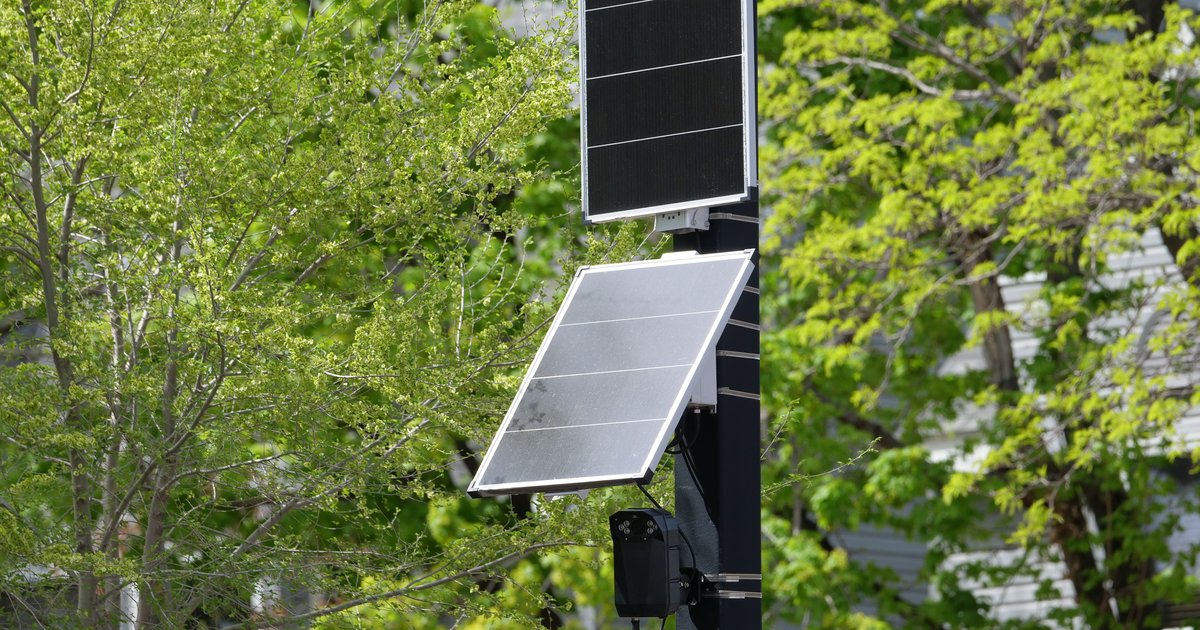
Flock Safety operates a nationwide network of more than 40,000 automated license plate reader cameras, used by over 5,000 police departments and tens of thousands of homeowners associations. Each camera photographs every passing vehicle, logs the plate, and stores the data — typically for 30 days — in a searchable database that any partnered agency can query. Critics argue this creates a warrantless, mass-surveillance dragnet that tracks the movements of ordinary drivers who have done nothing wrong. That core claim sits at the heart of nearly every active Flock Safety lawsuit.
The lawsuits generally fall into two categories: constitutional challenges filed against police departments that use Flock cameras, and direct consumer-privacy suits filed against Flock Safety, Inc. itself. Both argue that persistent, aggregated location data about a specific vehicle amounts to a Fourth Amendment search under the Supreme Court's 2018 Carpenter v. United States decision, which required a warrant for historical cell-site location data.
The Key Cases Driving the Flock Safety Lawsuit Trend
The most-cited case is Schmidt v. City of Norfolk (E.D. Va., filed October 2024 by the Institute for Justice). Two Norfolk residents sued after discovering the city's 172 Flock cameras captured essentially every drive they took. In 2025, the court allowed the Fourth Amendment claim to proceed past a motion to dismiss — a significant early signal that mass ALPR surveillance may require a warrant. The case is being closely watched as a potential vehicle for appellate review.
In Illinois, a proposed class action — Williams v. Flock Group, Inc. — invokes the Illinois Biometric Information Privacy Act (BIPA, 740 ILCS 14/) and the state's Automatic License Plate Reader Act (625 ILCS 5/11-208.11), which restricts ALPR data retention to 30 days and bars sharing with ICE and out-of-state agencies for immigration enforcement. Plaintiffs argue Flock's data-sharing practices violated both. BIPA cases carry statutory damages of $1,000 per negligent violation and $5,000 per intentional violation, so class exposure is substantial.
California plaintiffs have filed under the California Invasion of Privacy Act (Penal Code §§ 630–638) and S.B. 34, the state's ALPR statute, which requires written data-sharing policies and prohibits sharing ALPR data with out-of-state or federal agencies. A 2024 California State Auditor report found many departments were violating S.B. 34, fueling fresh litigation in 2025 and 2026.
What the Flock Safety Privacy Lawsuit Claims Actually Allege
Across the various complaints, a few consistent legal theories appear:
- Fourth Amendment violations — warrantless, long-term tracking of a specific vehicle's movements.
- State ALPR statute violations — ignoring retention limits, failing to post usage policies, or sharing data with prohibited agencies.
- Illegal camera placement — installing Flock cameras in public rights-of-way without the permits state DOT rules require (a central issue in South Carolina, where the Department of Transportation ordered dozens of improperly permitted cameras removed in 2024).
- Deceptive marketing — claims that Flock oversold accuracy or understated how broadly data is shared across its "Nationwide Lookup" network.
Flock Safety has publicly maintained that its cameras do not use facial recognition, that data is deleted after 30 days by default, and that agencies — not Flock — control searches. Several of the pending cases will test whether those defenses hold up when the aggregated effect is 24/7 location tracking.
State Laws Already Pushing Back
Even outside of courtrooms, legislatures are moving. Virginia passed H.B. 2724 in 2025, becoming the first state to comprehensively regulate ALPR use by law enforcement — capping retention at 21 days, banning data sales, and requiring quarterly audits. Washington's S.B. 5272 took a similar approach. In 2026, bills in Michigan, Colorado, and New York are mirroring the Virginia framework. For drivers, the practical result is a slowly tightening set of rules on how long your plate data can be stored and who can see it — but enforcement still depends on knowing when and where you've been scanned.
How This Affects You as a Driver
Most people have no idea how often their plate gets photographed. In a city with a dense Flock deployment, a daily commuter can easily be scanned 20 to 40 times a week. Unless your local agency fulfills a public-records request, that history is invisible to you — even though it may be queryable by thousands of other agencies through Flock's network.
That opacity is exactly why the Flock Safety privacy lawsuit docket keeps growing. Plaintiffs want to know what's being collected, how long it's kept, and who it's shared with — and courts are starting to agree they have standing to ask.
Frequently Asked Questions
Is Flock Safety illegal?
No. Flock cameras are legal in most jurisdictions, but their use is increasingly regulated. Several lawsuits argue specific deployments violate the Fourth Amendment or state ALPR laws, but no court has ruled the technology itself unlawful.
Can I find out if my plate has been scanned?
Sometimes. Flock data held by a police department is subject to state public-records laws (FOIA, CPRA, etc.). Agencies have released scan logs in response to records requests, and some of that data is now searchable publicly.
How long does Flock keep my data?
Flock's default is 30 days, though some agencies set shorter periods. Illinois and Virginia cap it at 30 and 21 days respectively. After the retention window, Flock says records are automatically deleted.
Can I opt out of Flock cameras?
Not directly. There is no consumer opt-out. Your only real levers are supporting local legislation, filing public-records requests, and — if you believe your rights were violated — contacting an attorney about ongoing class actions.
Does Flock use facial recognition?
Flock states it does not use facial recognition on its ALPR cameras. The cameras capture vehicles, plates, and "vehicle fingerprints" (color, make, bumper stickers), not faces.
The Practical Takeaway
You don't have to wait for a lawsuit to find out what Flock knows about your car. PlateQuery aggregates publicly released ALPR scan records — the same FOIA data at the center of these cases — and publishes a free lookup history on every plate's page. Search your own plate and you can see when and which agency's Flock network recorded it, without filing your own records request.
If what you see makes you uncomfortable, you can go a step further: open your plate's page, click Claim Ownership, and start a subscription (about $1.99/month or $11.99/year) that hides the ALPR history and incoming messages from the public, making them visible only to you. In an era of mass automated surveillance, that small amount of control — knowing what's out there, and who else can see it — is worth having.