What the Chrisanna Elser Flock Safety Lawsuit Is About
The Chrisanna Elser Flock Safety lawsuit is a federal civil rights case filed in Virginia challenging the constitutionality of the Norfolk Police Department's use of Flock Safety's automated license plate reader (ALPR) network. Elser, a Norfolk resident, joined co-plaintiff Lee Schmidt and the Institute for Justice in arguing that the city's roughly 170-plus Flock cameras create a warrantless surveillance dragnet. The suit, filed in October 2024 in the U.S. District Court for the Eastern District of Virginia, claims the system records and stores the movements of nearly every driver in the city for 30 days, regardless of suspicion.
At its core, the complaint argues this constitutes an unreasonable search under the Fourth Amendment. The plaintiffs lean heavily on Carpenter v. United States (2018), the Supreme Court ruling that found warrantless collection of long-term cell-site location data unconstitutional. Their argument: if tracking a phone for a week needs a warrant, tracking a car across an entire city for a month should too.
Who Is Chrisanna Elser?
Chrisanna Elser is a Norfolk, Virginia resident and one of the two named plaintiffs. According to court filings, she drives throughout the city for daily errands, work, medical appointments, and family visits — meaning the Flock camera network captures a detailed, searchable record of her life without any suspicion she has done anything wrong. Her co-plaintiff, Lee Schmidt, is a Navy veteran whose home sits within view of a Flock camera, logging essentially every departure and arrival.
Both are represented by the Institute for Justice (IJ), a national public-interest law firm that has repeatedly challenged government surveillance and civil asset forfeiture practices. IJ has framed the lawsuit as a test case that could reshape how the roughly 5,000 U.S. communities using Flock cameras — including large chunks of the Hampton Roads region — are allowed to operate them.
How Flock Safety's Camera Network Works
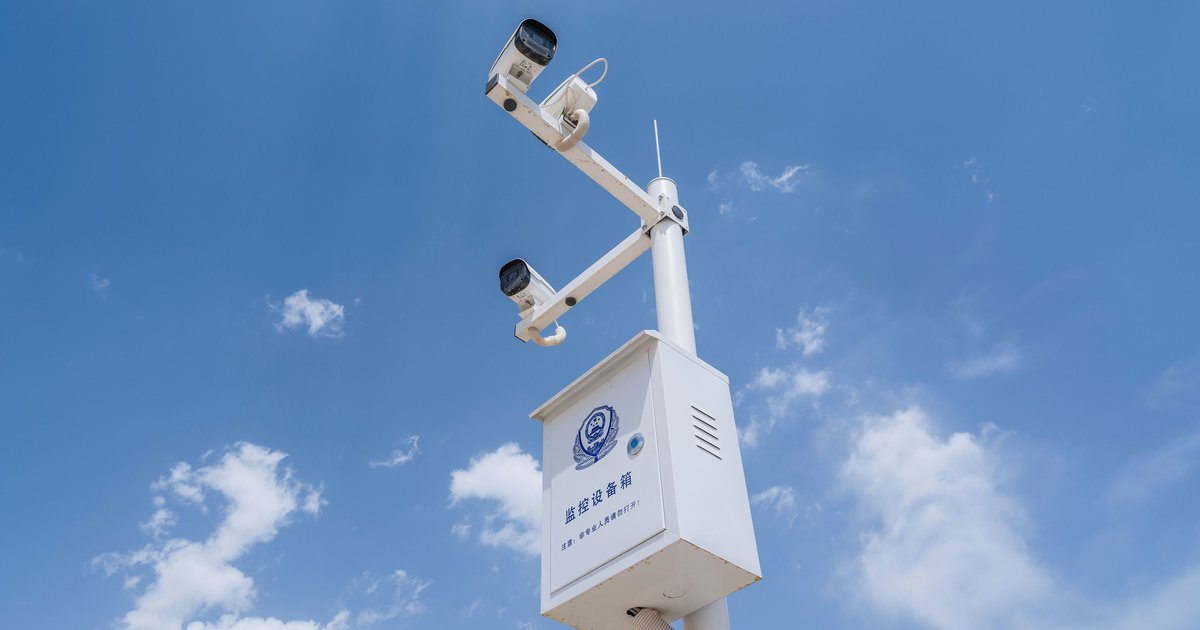
Flock Safety, headquartered in Atlanta, markets solar-powered ALPR cameras to police departments, homeowners' associations, and private businesses. The cameras photograph every passing vehicle, extract the license plate, and log the date, time, direction of travel, and "vehicle fingerprint" details like color, make, bumper stickers, and roof racks. That data flows into a searchable cloud database that agencies can query — and, through Flock's national network, agencies can often search plate scans from cameras owned by other departments across state lines.
In Norfolk, the complaint alleges the police installed 172 Flock cameras across the city and retain scans for 30 days by default. There is no warrant requirement to run a search, no judicial oversight, and no notice to the people whose movements are logged. Critics argue this is the exact "persistent surveillance" the Supreme Court warned against in Carpenter.
The Fourth Amendment Argument
The legal theory in the Chrisanna Elser Flock Safety lawsuit is straightforward but ambitious. Historically, courts have held that a single plate scan on a public road is not a "search" because drivers have no reasonable expectation of privacy in a plate displayed to the public. The plaintiffs don't dispute that — they argue the aggregation changes everything.
When cameras blanket an entire city and store 30 days of movement data on everyone, police can essentially rewind a person's life: where they worship, which doctor they visit, which protest they attended, whose house they stayed at overnight. That mosaic of information, the suit argues, goes far beyond what any officer could observe in person and triggers the same constitutional concerns as GPS tracking (United States v. Jones, 2012) and long-term cell data (Carpenter).
Virginia-Specific Context
Virginia law adds a notable wrinkle. Under Virginia Code § 2.2-3800, the state's Government Data Collection and Dissemination Practices Act, government agencies generally may not collect personal information unless its need has been "clearly established in advance." In 2020, the Virginia Supreme Court ruled in Neal v. Fairfax County Police Department that the Fairfax PD's ALPR database violated this statute by storing data on people not suspected of any crime. The Elser plaintiffs cite that precedent to argue Norfolk's program violates both the Fourth Amendment and Virginia statutory law.
Norfolk's city attorney has defended the program as a crime-fighting tool, pointing to arrests and recovered stolen vehicles. The case is being closely watched because a ruling against Norfolk could effectively force Virginia departments — and potentially cities nationwide — to adopt warrant requirements, shorter retention periods, or audit trails.
Why This Lawsuit Matters Beyond Norfolk
Flock Safety operates in all 50 states, and similar lawsuits have been filed or threatened in Illinois, Texas, and Washington. If the Fourth Circuit ultimately sides with Elser and Schmidt, it would be the first federal appellate ruling to hold that saturation ALPR surveillance is a search requiring a warrant. That would ripple outward to every city, HOA, and private business that has installed Flock cameras expecting unlimited, unreviewed access.
Even short of a sweeping ruling, the discovery phase is already shedding light on how often police run plate searches, who approves them, and how much data is shared across jurisdictions. For privacy advocates, that transparency is a win on its own.
Frequently Asked Questions
Is the Chrisanna Elser Flock Safety lawsuit a class action?
No. It is an individual civil rights lawsuit brought by two named plaintiffs seeking injunctive and declaratory relief, not money damages. A win would stop or restructure Norfolk's program rather than pay out a class.
Has Flock Safety been sued elsewhere?
Yes. Flock faces separate litigation and public records disputes in several states, and the Illinois ACLU has flagged possible state-law violations. The Elser case is the highest-profile Fourth Amendment challenge to date.
Can I find out if Flock cameras have scanned my car?
Sometimes. Many agencies release ALPR scan logs in response to public records (FOIA) requests, and some of that data is aggregated on public transparency sites — including PlateQuery.
What is Flock's response to the lawsuit?
Flock Safety has publicly maintained that its cameras are constitutional, that data is used only for legitimate law enforcement purposes, and that short retention periods and audit logs protect privacy. The company is not a defendant — the city of Norfolk and its police chief are.
The Practical Takeaway
Whether or not the Chrisanna Elser Flock Safety lawsuit succeeds, the case has made one thing clear: ordinary drivers have a right to know when, where, and by whom their license plates are being recorded. You don't have to wait for a court ruling to look into your own exposure. On PlateQuery, every license plate has its own public page that includes an ALPR lookup history section, built from Flock scan logs released under public records laws. You can search your plate to see which agencies' cameras have logged it and when — a quick way to turn abstract surveillance concerns into concrete information. If you'd rather keep that history private, signing in and clicking "Claim Ownership" on your plate's page starts a small subscription that hides your messages and scan history from public view, leaving only you with access.