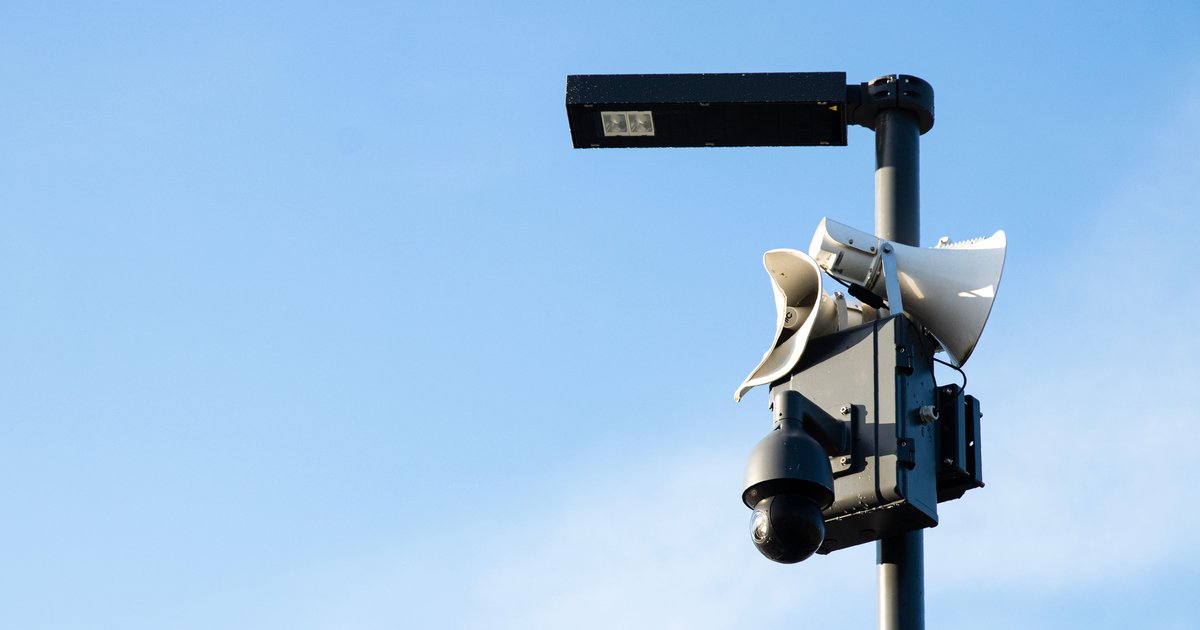
What an Automatic License Plate Reader Actually Does
An automatic license plate reader (ALPR) is a camera system that photographs every passing vehicle, uses optical character recognition to read the plate, and logs the plate number, timestamp, location, and often the vehicle's make, color, and direction of travel. The dominant vendor in the United States is Flock Safety, which operates roughly 40,000+ cameras across more than 5,000 communities as of 2026. Other systems you may encounter include Motorola Vigilant, Rekor, Genetec AutoVu, and Leonardo's ELSAG — the last of which is still common on police cruiser trunks.
Most ALPR cameras hold data for about 30 days by default, though some agencies extend that. The point to understand: if you drive past one, your plate is almost certainly logged, whether you've done anything wrong or not.
How to Find Automatic License Plate Readers Near Me
There are four reliable ways to figure out where ALPRs are operating in your area:
- The DeFlock crowdsourced map (deflock.me). This open-source project maps user-submitted ALPR locations worldwide, with especially dense coverage of Flock cameras in U.S. suburbs. It's the single best public source for "what's on my street."
- Your city or HOA's own announcements. Many municipalities issue a press release or council agenda item when they sign a Flock contract. Searching your town's name plus "Flock Safety" or "ALPR" in Google News usually surfaces coverage.
- Public records (FOIA) requests. Sending a short records request to your local police department asking for "camera locations, vendor contracts, and retention policies for automated license plate readers" is legally supported in most states.
- Visual recognition. Flock cameras are small, solar-paneled, roughly shoebox-sized units mounted on slim black poles about 10–14 feet high, usually near intersections or neighborhood entrances. Once you spot one, you'll spot them everywhere.
State Laws Vary — Check Yours
ALPR regulation is a patchwork. A few concrete examples worth knowing:
- California: Civil Code §1798.90.5–.55 (the 2015 ALPR statute) requires every operator to post a public usage and privacy policy and limits sharing of data. Some cities, like San Francisco, go further.
- New Hampshire: RSA 236:130 effectively bans most ALPR use, with narrow exceptions like E-ZPass and bridge tolling — one of the strictest regimes in the country.
- Virginia: After the 2024 debate over Fairfax County's Flock deployment, Va. Code §15.2-1723.2 (effective 2025) requires law-enforcement ALPR data to be purged within 21 days unless tied to an active investigation.
- Maine: 29-A M.R.S. §2117-A caps retention at 21 days and bars sale of ALPR data entirely.
If you're in a state with no specific ALPR law — which is still most states — cameras are generally legal on public roads, and data retention is set by the operating agency or HOA contract.
Who Operates the Cameras You See
Not every ALPR belongs to the police. In a typical neighborhood you might find a mix of:
- Municipal police or sheriff's departments operating Flock or Motorola systems for stolen-vehicle and Amber Alert hits.
- Homeowners associations that contract directly with Flock (around $2,500–$3,000 per camera per year) and may or may not share the feed with police.
- State police running cruiser-mounted ALPRs, which scan parked cars on the street as the car drives by.
- Private businesses — repossession companies like DRN and MVTRAC build massive commercial databases from tow-truck-mounted cameras in parking lots.
- Toll authorities (E-ZPass, SunPass, FasTrak), though these are generally siloed from law enforcement sharing networks.
Checking Whether Your Own Plate Has Been Scanned
Finding the cameras is one half of the picture. The other half is finding out whether your plate specifically has shown up in any public ALPR records. This is where transparency tools become useful. PlateQuery maintains a free, public ALPR lookup history section on every plate's page, built from Flock Safety records released through FOIA requests across the country. You can type in your own plate and see which agencies' cameras recorded it, and when.
It's not a complete picture — only agencies whose records have been released will appear, and only Flock-vendor data is currently indexed — but it's often eye-opening to see your own vehicle logged by a department three towns over that you've never heard of.
What You Can Do If You're Concerned
Short of staying off public roads, you can't opt out of being scanned. But you can take a few practical steps:
- Read your local agency's ALPR policy. If one isn't posted, that itself may violate state law — California, Virginia, and several others require it.
- Attend city council or HOA meetings when Flock contracts come up for renewal. These are usually one-year or three-year deals.
- File a FOIA request for your own plate's scan history. Many departments will provide it; some charge a small fee.
- Claim your plate on PlateQuery. Once you claim ownership of your plate (via a Stripe subscription of about $1.99/month or $11.99/year, started from that plate's own page), the ALPR lookup history and any messages tied to it become visible only to you. The public page remains, but those sensitive sections are hidden from strangers.
Frequently Asked Questions
Are automatic license plate readers legal?
In most U.S. states, yes — courts have consistently held that a license plate displayed on a public road has no reasonable expectation of privacy. A handful of states (New Hampshire, Maine, Virginia, California) impose meaningful restrictions on retention or use.
How long do ALPR cameras keep my data?
Flock's default is 30 days, but it's configurable per customer. Police-run systems in regulated states may be capped at 21 days (Virginia, Maine). Commercial repo databases like DRN keep data indefinitely.
Can I tell if a Flock camera recorded me today?Not in real time. You can see historical scans that appear in FOIA-released datasets through tools like PlateQuery, or file a records request directly with the agency operating the camera.Do ALPRs photograph the driver?
Generally no — Flock cameras are aimed at the rear plate and capture the vehicle, not the occupants. Red-light and speed cameras are a separate category and do photograph drivers.
The Practical Takeaway
The honest answer to "are there automatic license plate readers near me?" is almost certainly yes — and probably more than you'd guess. Use DeFlock to map the cameras themselves, use FOIA or your state's ALPR statute to understand the rules, and use PlateQuery to see what public records already show about your specific plate. If what you find makes you uncomfortable, claim your plate on PlateQuery to lock down that history so only you can see it going forward.