What Is an Automatic License Plate Reader?
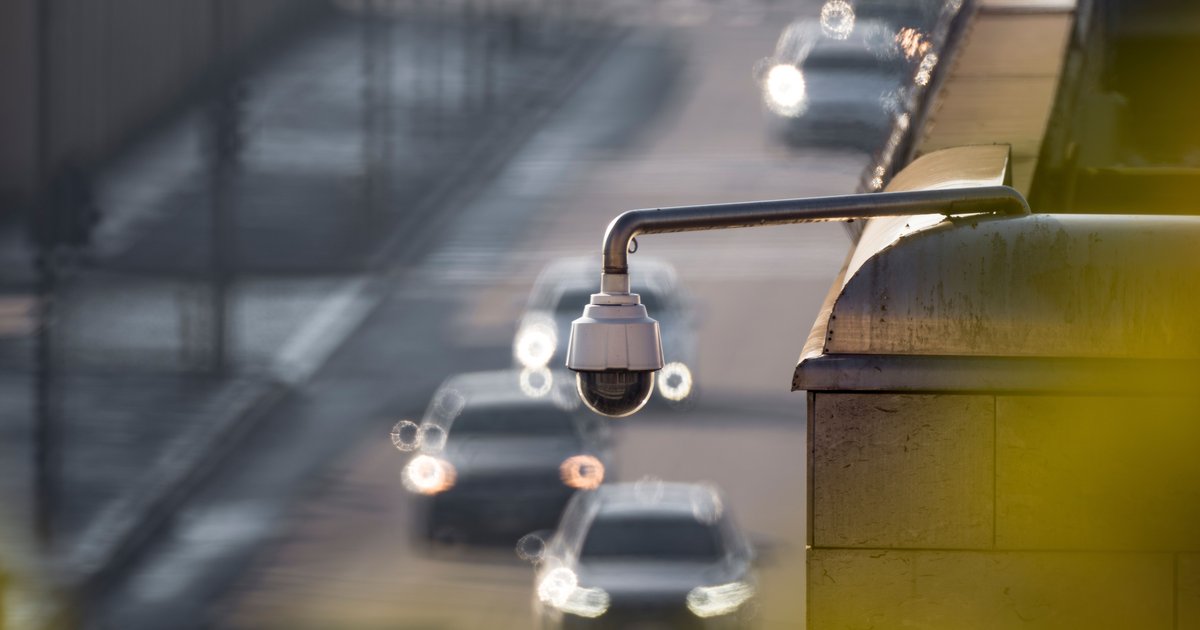
An automatic license plate reader (ALPR) is a camera system that photographs license plates, converts the characters to text using optical recognition, and logs each read with a timestamp, GPS coordinates, and often a photo of the vehicle. The data is stored in searchable databases that police, toll agencies, and private operators can query later. Some systems alert officers in real time when a plate matches a hotlist — stolen vehicles, Amber Alerts, or expired registrations.
In Massachusetts, ALPRs show up in three main flavors: fixed cameras mounted on poles or traffic signals (often made by Flock Safety or Vigilant Solutions), mobile units bolted to cruiser trunks, and tolling cameras along the Massachusetts Turnpike and tunnels operated by MassDOT's All Electronic Tolling system. Each has a different purpose and a different retention schedule.
Automatic License Plate Readers in Massachusetts: Who Uses Them?
Massachusetts has no comprehensive statewide ALPR statute, which means policy is a patchwork. The Massachusetts State Police have operated ALPRs since 2008, originally funded through a Department of Homeland Security grant. Local departments — including Boston, Cambridge, Worcester, Springfield, Brookline, and dozens of smaller towns — have added their own systems, many through Flock Safety's subscription model, which typically runs around $3,000 per camera per year.
MassDOT runs the largest tolling ALPR network in the state. Under M.G.L. Chapter 6C, Section 13, toll data collected through the E-ZPass and pay-by-plate systems can only be used for toll collection, enforcement, and limited law enforcement purposes with proper legal process. That's one of the few hard legal guardrails Massachusetts has placed on plate data.
Private operators use ALPRs too. Repossession companies, parking garages (think Boston Common Garage or Logan Airport lots), and homeowners' associations deploy readers that aren't bound by police policies at all. Their data often ends up in commercial databases like DRN or MVTRAC, which law enforcement can purchase access to without a warrant.
What Massachusetts Law Says — and Doesn't Say
For over a decade, lawmakers have filed bills to regulate automatic license plate readers in Massachusetts. The ACLU of Massachusetts has pushed for retention limits, audit requirements, and warrant protections. None of the comprehensive bills have passed, though.
The most important court decision on the topic is Commonwealth v. McCarthy, decided by the Supreme Judicial Court in 2020. The SJC ruled that limited ALPR use — in that case, four cameras on the Bourne and Sagamore bridges — didn't violate Article 14 of the Massachusetts Declaration of Rights. But the court warned that large-scale, aggregated ALPR surveillance could constitute a search requiring a warrant. In other words: a handful of cameras is fine; a dragnet is not. Where that line sits remains an open question that lower courts continue to work through.
Retention policies vary wildly. State Police hold non-hit ALPR data for one year under their internal policy. Some municipal departments keep it for 30 days. Flock Safety's default is 30 days, though agencies can adjust. There is no statutory maximum, which is unusual compared to states like New Hampshire (which effectively bans ALPRs) or Maine (which caps retention at 21 days under 29-A M.R.S. § 2117-A).
Flock Safety Cameras: The Fastest-Growing Network
If you've driven through a Massachusetts suburb in the past two years, you've probably passed a small solar-powered camera on a black pole — that's a Flock. Towns from Andover to Easton to Longmeadow have signed Flock contracts, often approved at town meetings with limited public debate. The cameras capture every passing plate, not just suspects, and share data across a nationwide network of participating agencies by default.
Flock contracts and installation locations are public records under M.G.L. Chapter 66, Section 10 — the state's public records law. Journalists, researchers, and ordinary residents have filed FOIA-style requests across Massachusetts and received logs showing exactly which plates were scanned, when, and by which agency. This is where transparency tools come in: aggregated public records now let anyone look up a plate's scan history after the fact.
Your Rights When Your Plate Gets Scanned
You generally don't have a legal expectation of privacy in your license plate when it's visible on a public road — that's long-settled under both federal and Massachusetts case law. But you do have the right to:
- Request public records. File a request with your local police department asking for their ALPR policy, retention schedule, and any records of your specific plate being scanned. Massachusetts agencies have 10 business days to respond under the 2017 public records reform.
- Attend public meetings. Flock Safety contracts and camera placements are typically approved by select boards or city councils. Public comment periods are the realistic place to push back.
- Check your scan history. Because FOIA releases are becoming more common, you can often see when and where your own plate was recorded by municipal Flock networks.
Frequently Asked Questions
Can Massachusetts police track my location in real time with ALPRs?
Real-time alerts are only triggered when your plate matches a hotlist (stolen, wanted, expired registration, Amber Alert). Routine driving generates passive records that are queried later, not live tracking — though aggregated historical data can still reconstruct your movements.
Do I have to display my front plate in Massachusetts?
Yes. Under M.G.L. Chapter 90, Section 6, Massachusetts requires both front and rear plates on most passenger vehicles, and they must be clearly visible and unobstructed. Covers, tinted shields, and ALPR-blocking sprays can trigger a citation.
How long does Massachusetts State Police keep ALPR data?
Per MSP policy (not statute), non-hit data is retained for one year, then purged. Hit data tied to active investigations can be held longer under standard evidence rules.
Can I opt out of being scanned?
No. There is no opt-out mechanism for public-road ALPRs in Massachusetts. The only way to avoid being scanned is to avoid the roads where cameras are installed — which, in 2026, is increasingly difficult.
Takeaway: Check Your Own Plate's Scan History
The expansion of automatic license plate readers in Massachusetts has outpaced legislation, so transparency has to come from the public side. PlateQuery aggregates ALPR records released through public-records requests and makes them searchable by plate. You can look up your own Massachusetts plate for free and see which agency's Flock network recorded it, and when — no account needed for the public lookup.
If you'd rather keep your own plate's scan history and inbound messages private, you can claim your plate from its PlateQuery page for about $1.99 a month or $11.99 a year through Stripe. Once your claim is active, the ALPR history and message inbox for that plate become visible only to you, while the public profile page itself stays live. In a state where lawmakers haven't drawn clear lines around plate surveillance, that's a small but concrete way to take control of your own data.