What Are Automatic License Plate Readers (ALPRs)?
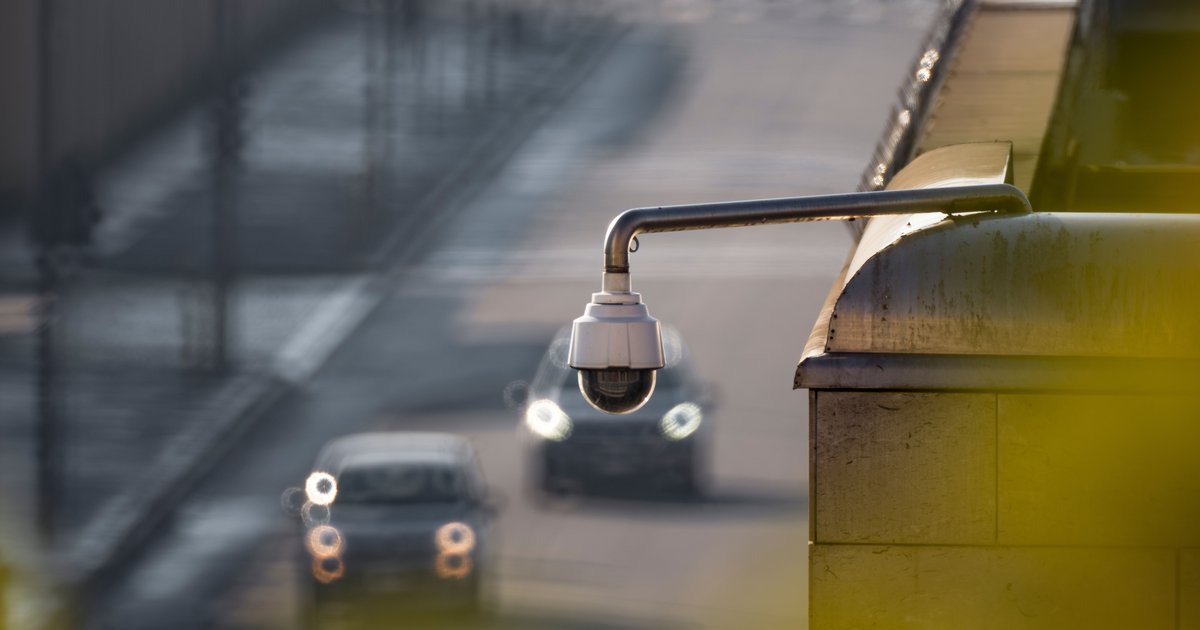
Automatic license plate readers (ALPRs) are high-speed cameras paired with optical character recognition software that capture images of license plates, convert them into searchable text, and store them in a database alongside a timestamp, GPS coordinates, and often a photo of the vehicle. They can be mounted on police cruisers, highway overpasses, parking garage entrances, repo trucks, or stationary utility poles. A single ALPR camera can read thousands of plates per hour — far faster than any human officer could manually run a plate.
Unlike a traffic-stop plate check, an ALPR scan happens whether or not you've done anything wrong. The data is retained, aggregated, and often shared across jurisdictions, which is why civil liberties groups and state legislatures have paid increasing attention to how these systems are used.
How an Automatic License Plate Reader Actually Works
The hardware is deceptively simple: an infrared-sensitive camera takes a high-contrast image that cuts through glare, darkness, and weather. Software then isolates the plate within the frame, segments the individual characters, and runs OCR to produce a plain-text string like "7ABC123." That string is instantly checked against "hot lists" — stolen vehicles, Amber Alerts, expired registrations, outstanding warrants, or BOLOs — and any hit triggers an alert to a dispatcher or officer within seconds.
Every scan, hit or not, is typically written to a database. Vendors like Flock Safety, Motorola's Vigilant, and Rekor have built national networks where a plate scanned in one city can be queried by an agency hundreds of miles away. Retention periods vary wildly — from 24 hours in some jurisdictions to several years in others.
Who Operates ALPR Networks
ALPR deployment falls into roughly four categories:
- Law enforcement — city police, sheriff's offices, state troopers, and federal agencies like CBP and ICE.
- Private security and HOAs — neighborhood associations increasingly install Flock cameras at subdivision entrances.
- Commercial operators — tow companies, repossession agents, and insurers who scan parking lots to build location histories.
- Transportation agencies — toll authorities, airports, and parking enforcement.
Flock Safety alone claims coverage in more than 5,000 U.S. communities as of 2026, and because many of those customers opt into data-sharing, a plate caught by a single camera is often queryable by hundreds of agencies.
State Laws and Real-World Examples
Regulation of automatic license plate readers varies dramatically by state. A few concrete examples:
- California — Civil Code §1798.90.5 et seq. requires ALPR operators to publish a usage and privacy policy and limits sharing with out-of-state agencies. A 2023 state attorney general bulletin (OAG Bulletin No. 2023-DLE-01) reminded agencies that sharing ALPR data with ICE or out-of-state law enforcement violates SB 34 and SB 54.
- Virginia — Code of Virginia §15.2-1723.2, enacted in 2023, caps ALPR data retention at 30 days unless the record is tied to an active investigation.
- New Hampshire — RSA 236:130 generally prohibits ALPR use by the state and municipalities except for toll collection and specific, narrow law-enforcement purposes, with a 3-minute retention rule for non-hits.
- Maine — 29-A MRSA §2117-A limits retention to 21 days and bans sale of the data.
Other states — Texas, Florida, and Georgia among them — have far looser frameworks, allowing retention measured in years. If you want to know the rules where you live, start with your state statutes database and your local agency's published ALPR policy, which many departments post under their transparency pages.
Privacy Concerns and Public-Records Access
The core concern isn't a single scan — it's the pattern. String together enough ALPR hits and you can map someone's commute, their doctor, their place of worship, their romantic partner's address. Courts have begun to notice: in 2024, a federal judge in Schmidt v. City of Norfolk allowed a Fourth Amendment challenge against a 172-camera Flock network to proceed, finding that persistent, dragnet-style surveillance may implicate the Carpenter doctrine.
On the flip side, many ALPR records are considered public under state Freedom of Information laws. Journalists, researchers, and ordinary citizens have successfully FOIA'd scan logs from agencies — which is precisely how transparency tools surface the data back to the people whose plates were scanned.
How to Check Your Own ALPR Scan History
Most drivers have no idea how often their plate has been scanned, by which agencies, or where. There are three practical ways to find out:
- File a public-records request directly with your local police department or sheriff's office asking for all ALPR records associated with your plate. Response times range from a few days to several months depending on the state.
- Check vendor-provided transparency portals — Flock Safety offers a limited "Transparency Portal" for some participating agencies that lists aggregate statistics but usually not individual-plate histories.
- Use a public ALPR lookup tool that aggregates FOIA'd data across jurisdictions, letting you search by plate number without filing paperwork yourself.
Frequently Asked Questions
Are ALPRs legal?
Yes, in most states, though specific uses, retention periods, and data-sharing rules are increasingly regulated. A handful of states (notably New Hampshire and Maine) have strict limits, while others have almost none.
Can anyone look up my license plate scan history?
In many states, yes — ALPR records held by government agencies are often subject to public-records laws. Private operators like HOAs and repo companies, however, are not usually required to disclose their data.
Do ALPRs read toll transponders or just plates?
Standard ALPRs only capture the visible plate. Toll systems may use both ALPR and RFID transponder reads, which is how you still get billed if your transponder fails.
How long is ALPR data kept?
Anywhere from a few minutes (New Hampshire non-hits) to multiple years, depending on the agency and state law. Flock Safety's default retention is 30 days, but customer agencies can shorten or extend it.
Can I opt out of being scanned?
No — if you drive on public roads with a visible plate, you can be scanned. Covering or obscuring a plate is illegal in every state.
The Practical Takeaway
Automatic license plate readers aren't going away — they're expanding. The best defense against surveillance you can't see is transparency you can. Every plate's page on PlateQuery includes a free, public ALPR lookup history section drawn from FOIA'd records, showing when and which agency's Flock Safety camera recorded a plate. You can search your own plate out of curiosity, check a plate you're wondering about, or — if you own the vehicle — claim your plate's profile from its page for about $1.99/month and make that scan history (plus any messages sent to you) visible only to you. In an era of 24/7 passive surveillance, that's a small, practical lever worth pulling.