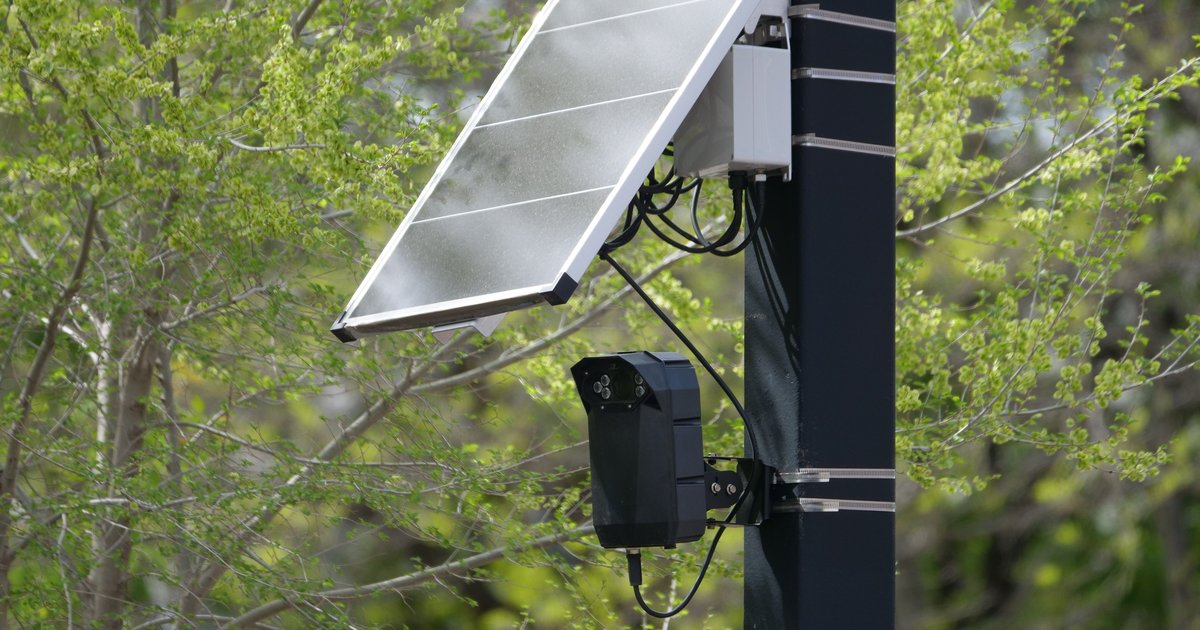
What an Automatic License Plate Reader Actually Is
An automatic license plate reader (ALPR) is a camera system — usually paired with infrared illumination and onboard optical character recognition — that photographs every passing vehicle, extracts the plate number, and logs a timestamp, GPS coordinate, and often a 'vehicle fingerprint' (color, make, body type, bumper stickers). The two dominant vendors in the United States are Flock Safety, which markets solar-powered pole-mounted cameras to police departments and HOAs, and Motorola's Vigilant Solutions, which powers many state police mobile units. Readings get uploaded to cloud databases and typically retained for 30 days by default, though some agencies keep them longer.
The important thing to understand is that ALPRs are not red-light cameras or speed cameras — they're not looking for a violation. They scan everyone, every time, and the data sits in a searchable database that officers (and sometimes other agencies via network sharing) can query later.
Where Automatic License Plate Reader Locations Are Most Common
ALPR deployments cluster in a few predictable places:
- Entrances and exits to residential neighborhoods and HOAs — this is Flock's bread-and-butter market. If you drive into a gated or semi-gated subdivision, assume you're being scanned.
- Major arterial roads and highway on-ramps — city police and state agencies place fixed cameras at chokepoints to catch stolen vehicles and Amber Alert hits.
- Shopping center and apartment complex entrances — private property owners install them for liability and crime deterrence.
- Patrol cars — mobile ALPRs mounted on cruiser trunks or light bars scan parking lots and moving traffic continuously.
- Toll gantries — E-ZPass and SunPass readers in the Northeast and Southeast double as plate readers for law-enforcement queries.
In California, for example, Civil Code § 1798.90.5 requires every public agency operating an ALPR system to post a usage and privacy policy publicly on its website — so if you want to find official camera locations in a California city, start with the police department's transparency page. Berkeley PD and Oakland PD both publish annual ALPR reports under this statute.
How to Find Specific Camera Locations in Your Area
Flock Safety publishes a public Transparency Portal for participating agencies at transparency.flocksafety.com. You can search by city or agency and see the number of cameras deployed, searches performed, and the department's retention policy. Not every department opts in, but hundreds do — including Atlanta, Memphis, and most of the Dallas–Fort Worth suburbs.
For a more comprehensive map, the Electronic Frontier Foundation maintains the Atlas of Surveillance (atlasofsurveillance.org), a crowdsourced database that cross-references news stories, FOIA responses, and procurement records. As of 2026 it lists ALPR deployments in more than 2,000 U.S. jurisdictions. The EFF won't give you a street-corner map, but it will tell you which agencies in your county operate the technology.
For precise pole locations, your best tool is a public records request. Under most state freedom-of-information laws — Illinois's FOIA (5 ILCS 140), Florida's Chapter 119 Sunshine Law, Texas Government Code Chapter 552 — camera locations installed on public rights-of-way are considered public records. Agencies sometimes redact pending-investigation locations, but a request for 'a list of all fixed ALPR camera locations operated by [agency]' is usually fulfilled within 10–20 business days.
Who Operates ALPRs Beyond the Police
It's easy to assume all these cameras belong to law enforcement, but a huge share are private:
- Homeowners associations contract directly with Flock on roughly $2,500-per-camera-per-year subscriptions.
- Repossession companies run some of the largest commercial ALPR databases in the country — DRN and MVTRAC collectively hold billions of scans sold to lenders, insurers, and (via contract) police.
- Parking enforcement vendors like T2 Systems and Passport use ALPR for permit validation on university campuses and downtown lots.
- Insurance investigators buy query access to commercial databases to verify garaging addresses and investigate fraud.
This matters because 'where ALPRs are' isn't just a question of government surveillance — it's a sprawling private ecosystem, and your plate can be scanned dozens of times a week without a single police camera being involved.
How to See Where Your Plate Has Actually Been Scanned
Knowing where cameras exist is different from knowing where your plate has shown up. Many agencies will respond to a public-records request asking for all ALPR hits on a specific plate owned by the requester — California's SB 34 and similar transparency laws in Virginia, Maine, and New Hampshire explicitly allow this.
PlateQuery aggregates FOIA-released ALPR logs from Flock Safety networks and makes them searchable by plate. On any plate's page, you'll see a free public lookup history showing which agency recorded the plate and when. For most people this is the fastest way to turn an abstract worry ('am I being tracked?') into a concrete answer ('yes, four scans in the last 90 days by two agencies — here they are').
Frequently Asked Questions
Are automatic license plate reader locations legal everywhere?
ALPRs are legal in all 50 states, but at least 16 states regulate retention periods, data sharing, or require published usage policies. New Hampshire RSA 236:130 is the strictest — it bans most government ALPR use outside of toll collection and specific investigations.
Can I legally map or photograph ALPR cameras?
Yes. Cameras installed on public poles facing public roads have no reasonable expectation of privacy. Photographing them from a public sidewalk is protected First Amendment activity.
How long do agencies keep my scan data?
Flock's default is 30 days. California caps most agencies at 60 days unless the plate is tied to an active investigation. Some Texas and Florida departments retain for a year or longer. Commercial databases (DRN, MVTRAC) effectively retain forever.
Can I opt out of being scanned?
No. ALPRs scan every plate in view. The only 'opt-out' is to request deletion of your data from specific databases where state law allows it, or to claim your plate's profile on platforms like PlateQuery so the lookup history becomes private to you.
Practical Takeaway
If you want to know whether automatic license plate reader locations near you are actually scanning your vehicle, don't start with speculation — start with the data. Search your plate on PlateQuery to see the FOIA-sourced scan history on its public page: dates, times, and the agency whose Flock network recorded it. If you'd rather that history not be public, you can claim your plate directly from its page by clicking Claim Ownership and starting a Stripe subscription ($1.99/month or $11.99/year). Once your claim is active, the ALPR history and any messages sent to that plate become visible only to you — the public page stays up, but the surveillance data stops being everyone's business.